By Best Etinosa, founder of Etin Media
Here’s how to get clients for a recruitment agency on LinkedIn: find employers whose hiring needs exceed their internal recruitment capacity, then start a short conversation and book a call.
One recruitment founder spent six months using Apollo and won one client. With the same business and offer, we implemented this strategy. He signed five new clients in four months.
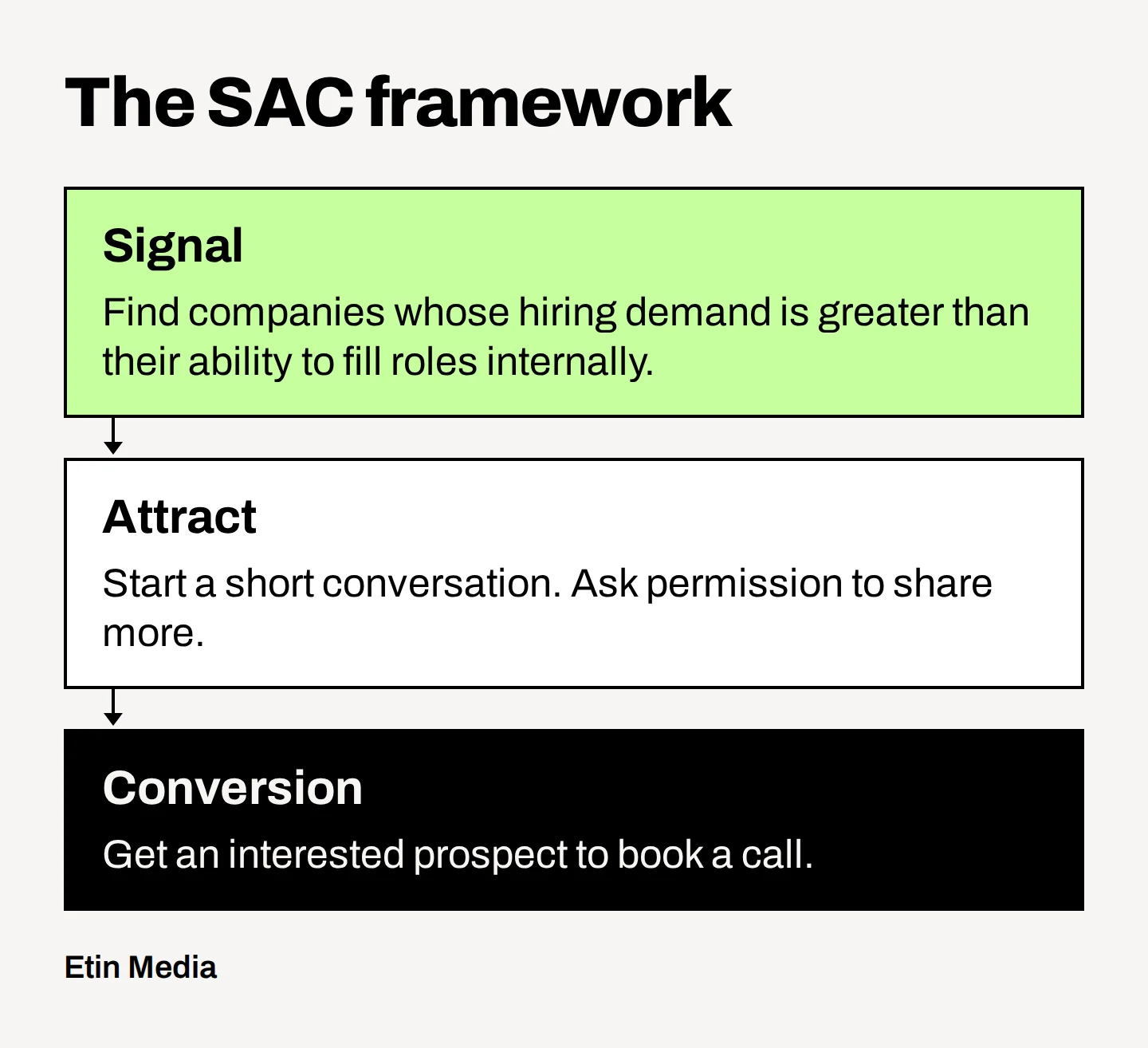
I use SAC:
- Signal: find employers with a reason to pay for recruitment help.
- Attract: start a conversation and ask permission to share more.
- Conversion: invite interested prospects onto a call.
That result is not a promise that you will sign five clients. You might try this and get results. You might not. I’m showing you the process we use for our business and our clients.
Why I focus on LinkedIn for recruitment client acquisition
If your recruitment firm makes less than $100,000 a month, my recommendation is to focus entirely on LinkedIn.
Facebook, Instagram and blogging can work. But from my experience working with recruitment firms, LinkedIn is the best place to find quality leads. A lead here is a potential employer client, not a candidate looking for work.
And you do not need to spend your day posting.
You do not have to become someone who writes performative LinkedIn posts every morning. We use LinkedIn to identify the right people and start conversations with them.
I’m Best, the founder of Etin Media, a marketing agency for businesses that sell to other businesses. Over five years, my business generated more than 100,000 leads for clients. One client also had more than 200 qualified calls booked on their calendar in a month.
Those are results across our client work. The recruitment founder’s result above is one specific example of this strategy.
Signal: find employers that need an external recruiter
A job advert tells you that a company has a vacancy. It does not tell you why that company would pay your recruitment agency to fill it.
That is the gap I want you to look for.
Most recruiters buy access to a database such as Apollo, look for companies they think might be hiring, and start messaging. Others go a step further and contact companies with open jobs.
But your competitors can see those jobs too. I want to know whether the employer has more hiring demand than its own team can handle.
Hiring signals for recruitment agencies: demand versus capacity
One combination I look for is an engineering department that is growing, has several vacancies, and has a very small internal talent acquisition team or none at all.
If the company needs several engineers but has very little internal hiring support, there is a higher chance it needs an agency. It may already be working with one or looking for one.
That is a stronger reason to make contact than the vacancy alone.
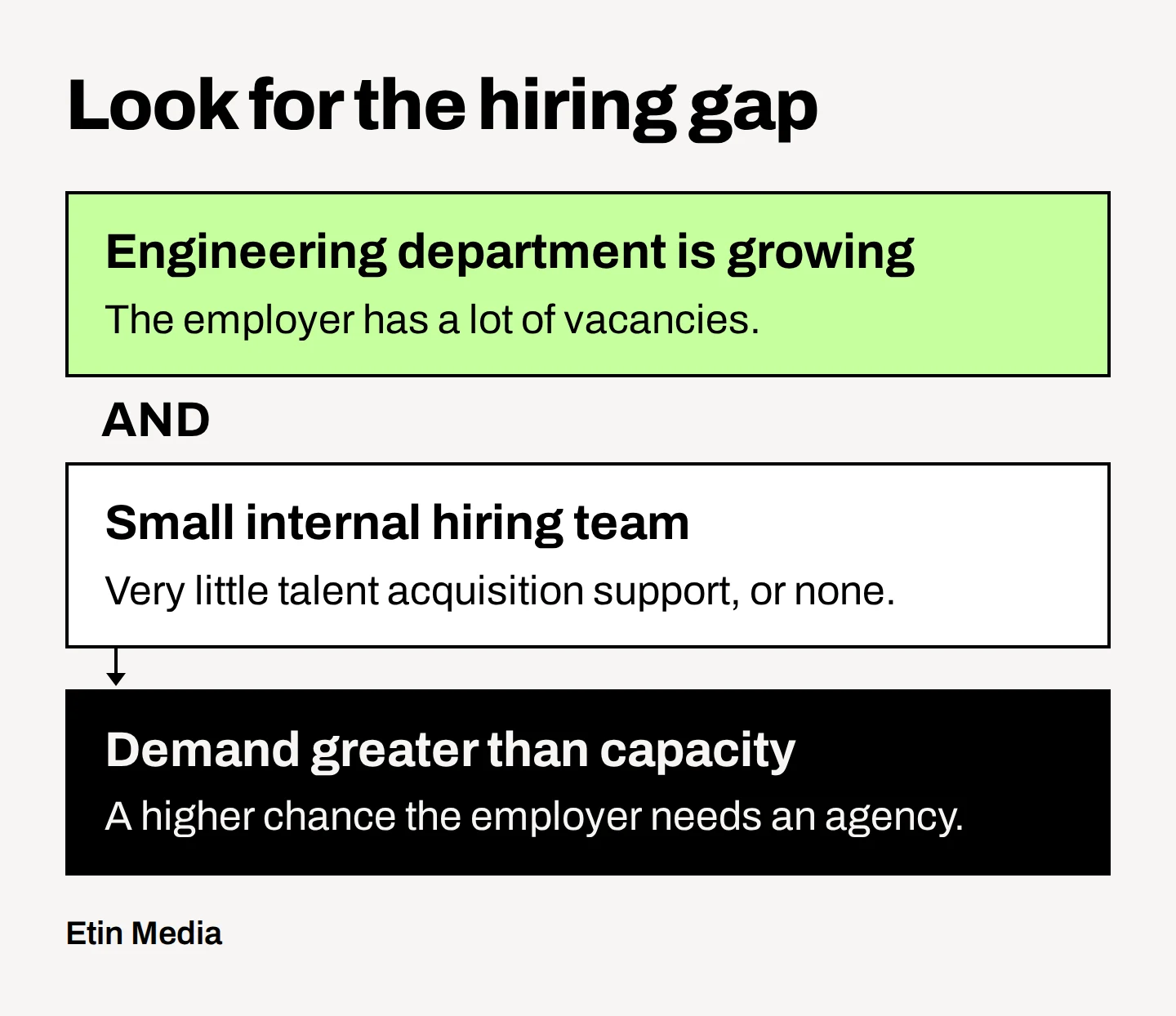
This is one of the signals we use. The point is to find a combination that explains why the company might need outside help.
Use Sales Navigator to research and save the right leads
Sales Navigator is the paid search tool I use for this research. Check whether you are eligible for a free trial.
Build your search around the hiring signal: growing engineering demand, open roles and a small or absent internal hiring team. The people you want to speak with are founders, HR staff or hiring managers in the niche you serve.
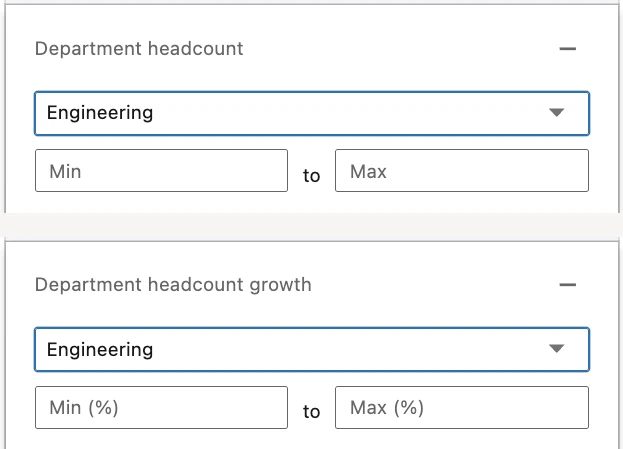
Save the search and copy its link into a spreadsheet so you can return to it.
A search might give you 500 or 1,000 people. Repeat the research across relevant searches until you have about 5,000 to 10,000 leads.
Record each contact’s name, role, company and LinkedIn profile URL in Google Sheets. Use the profile URL to remove duplicates across searches.
We collect these records through a browser-assisted workflow, rather than a native Sales Navigator spreadsheet export.
I build this working list first, then work through it over the next three months. The 5,000 to 10,000 leads are that pool of contacts, not a daily messaging target.
One employer relationship can be worth $15,000 to $100,000 across multiple roles filled over one or two years. Treat this list with care rather than continually abandoning it to look for another batch of names.
Attract: start a conversation without delivering your whole pitch
Your first message should be a short question that is easy to answer.
Before the wording, though, there is a mental block worth dealing with. I used to hate outreach. It felt disingenuous to message someone with friendly energy when I wanted to sell them something.
What helped was thinking about what the message could make possible.
One B2B client added $87,000 in monthly recurring revenue in about four months through our service. That client relationship started because I reached out. He could hire more people, provide for his family and take more time away from the business.
For a recruiter, a message can help someone find the company where they can do good work. It can help a founder hire the people they need, improve what they offer customers and get some time back.
That is how I think about reaching out.
The five-step LinkedIn outreach sequence
I see founders, marketers and appointment setters trying to explain everything and handle every objection in the messages. Keep the conversation focused on getting an interested person onto a call.
The sequence I use is:
- Send a connection request without a note.
- After they accept, ask one short opening question.
- When they answer, explain why you asked and request permission to send more detail.
- If they agree, send a short video directly in the chat.
- If they want to discuss it after watching, send your booking link.
Send a blank connection request
We have tested connection messages repeatedly. In our experience, the best connection message is no message.
Send the request without a note. The conversation starts after they accept.
Ask a question they can answer quickly
Your opening question should take very little effort to answer. For an engineering recruitment firm approaching an employer, it could be:
“Are you handling your engineering hiring entirely in-house at the moment?”
That gives the employer a simple question to answer and tells you whether they already use outside recruitment help.
Ask permission before sending the pitch
After they answer, explain why you asked and ask whether they are open to hearing more.
Continuing the same engineering recruitment example:
“The reason I ask is that we help engineering teams fill roles when their internal hiring team is stretched. Open to a short video showing how we work?”
Adapt the wording to the service you actually offer. The first message starts the conversation. This one asks permission to explain your approach.
The person can give you a thumbs-up to say yes.
Only then do you send the video. You have given them a simple choice at each step instead of putting a long sales message in front of someone who has not asked for it.
What to put in your recruitment outreach video
Use a short video to introduce yourself, show real proof, explain the benefit of working with you and ask whether they want a call.
My target is a video under two minutes and smaller than 20 MB. Send the video file directly in the LinkedIn conversation rather than sending a YouTube or Google Drive link. It feels more natural, and the person can watch it in the chat.
Structure the video like this:
- Introduce yourself and say whom you help and what you help them achieve.
- Show case studies of employers you have helped and the results you got for them.
- Explain your hiring approach in three parts, focused on saving time, saving money and finding the best candidates possible.
- Ask them to give you a thumbs-up if they want to discuss it. Then send the booking link.
Keep the case studies short enough to fit the video. Use your actual client work.
The hiring approach does not need to be a detailed lesson on how you find candidates. Explain what working with you does for the employer. That is what makes the call worth having.
Once they express interest, your booking message could be:
“Here’s the link to choose a time for us to discuss your engineering hiring.”
How to get recruitment clients when you have no case studies
If you have no case studies, skip the video and invite the prospect to a genuine research interview instead.
I call this the interview outreach method.
After the person answers your opening question, explain that you are interviewing founders, HR staff or hiring managers in your niche about their hiring challenges.
The subject needs to fit that niche. This is one reason I recommend focusing your recruitment business on a particular market. You can ask about a problem those employers recognize instead of sending an invitation that could apply to anyone.
As a thank-you for their time, offer to send three qualified candidates for free.
Make the first call a real interview
When they book, use the call to ask about how they hire, what is difficult and what their experience has been.
Let them tell you their story. The research call should actually be a research call.
Once they have explained their challenges, you can say that you think you may be able to help and suggest a second call. That is where you show your strategy for filling their roles.
In my experience, about 90% agree to that next call when we have built rapport during the interview.
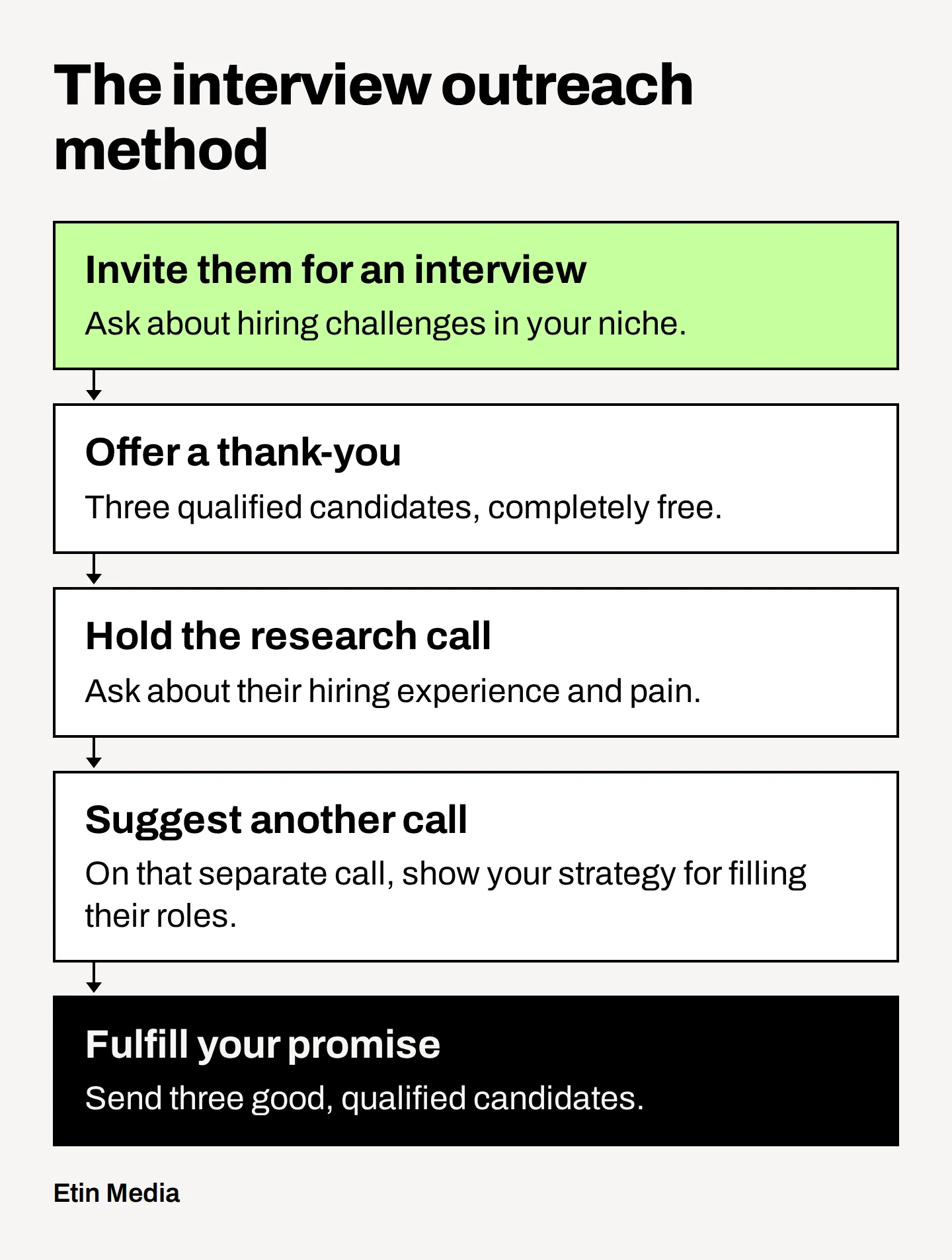
And fulfill the promise. Send the three good, qualified candidates for free.
That is how you can start conversations before you have client case studies to put in a video.
Can you automate the LinkedIn outreach process?
You can do the research and conversations yourself. If you have less time and more budget, the aim of our automated version is to reduce ongoing management to about 30 minutes a week.
We use a private, invite-only tool for our clients. A browser-connected AI agent is another, more technical option. Using a browser agent does not turn automated activity into manual outreach. LinkedIn prohibits unauthorized automation, so automated activity can put your account at risk of restriction.
Questions about getting clients for a recruitment agency
Do I need to post on LinkedIn every day?
No. This system uses LinkedIn for research, connection requests and direct conversations. It does not depend on daily content.
Is a company advertising jobs enough of a hiring signal?
An open role shows demand, but it does not explain why the employer would pay your agency. I look for a combination such as a growing engineering department, several vacancies and a small or absent internal hiring team.
Should I send my booking link in the first message?
In this sequence, you first start the conversation and ask permission to share more. With the video route, you send the booking link after the prospect has watched and expressed interest.
Do I need case studies to book recruitment sales calls?
You can use the interview method instead. Invite employers to talk about their hiring challenges, genuinely conduct the interview, offer three qualified candidates as a thank-you and ask permission to have a separate strategy call.
Can I do the outreach without buying automation software?
Yes. Automation is optional. Sales Navigator remains a paid research tool, with trials for eligible accounts.
Get help setting up your recruitment client acquisition system
The process starts with finding an employer that has a reason to need your service. From there, each message has one job: help an interested person take the next step toward a conversation.
If you want us to set up this system for your recruitment firm, book a free client acquisition advisory session with me.
We work on a pay-on-results basis, so you do not have to pay a large upfront fee to start. We can talk through how we would work together on the call.
If you are comparing outside help before choosing a partner, you can also read our guide to client acquisition agencies.