By Best Etinosa, founder of Etin Media
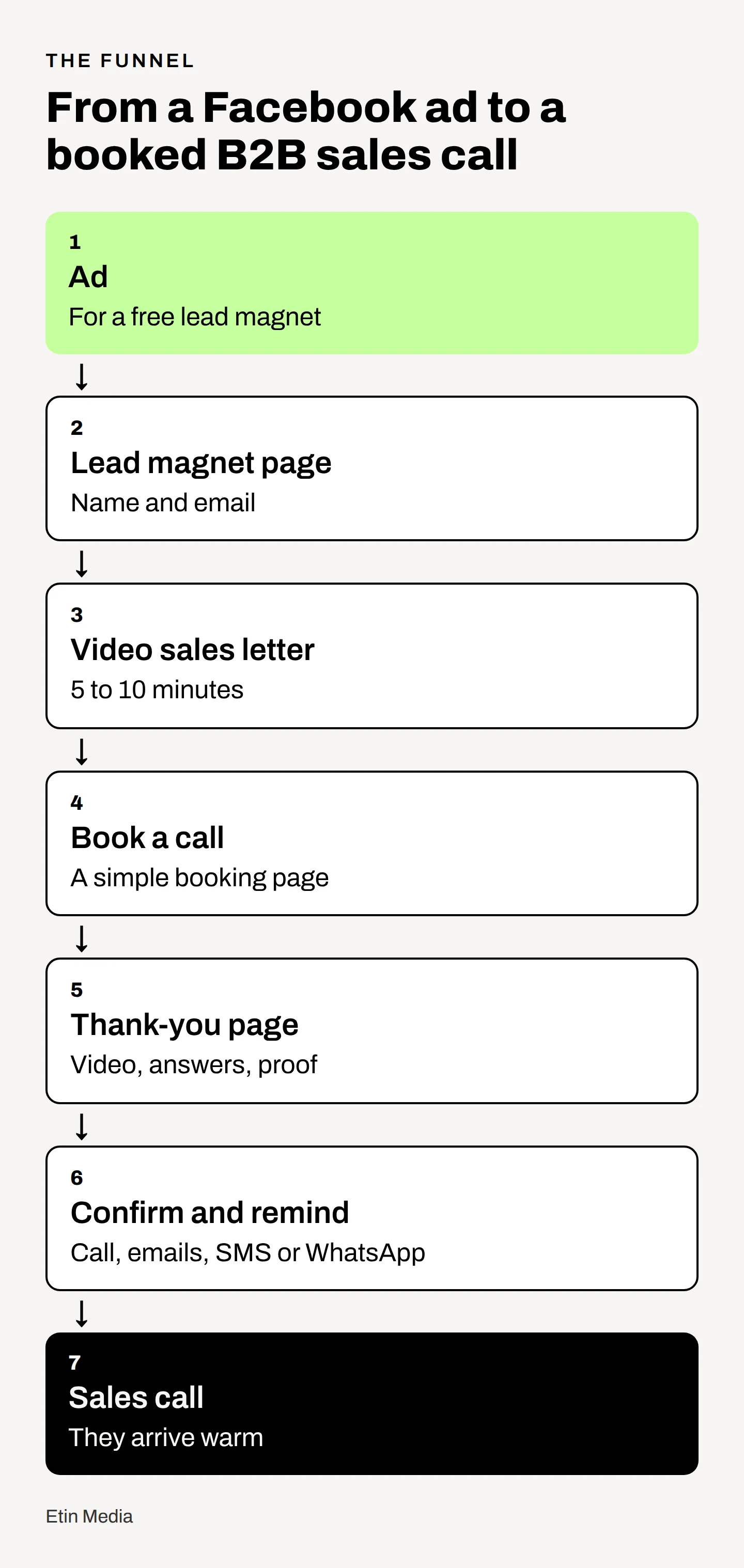
My Facebook ads funnel for B2B lead generation takes someone from an ad for a free lead magnet to a short video sales letter, a booked call and follow-up that builds trust before the sales conversation.
We helped one of our B2B clients add an extra $87,000 in monthly recurring revenue in about four months with this system, on a Facebook ad budget of $90 a day.
Here’s how the whole system fits together:
- Run ads for a lead magnet. Offer a tool, ebook, free report or live training that grabs attention and builds curiosity. Collect their name and email on the lead magnet page.
- Show a video sales letter, or VSL. This five-to-ten-minute video explains your offer, shows proof and makes them curious enough to book a call.
- Let them schedule a call. Send them from the VSL page to a simple booking page.
- Prepare them on the thank-you page. Use a video, answers to their questions and case studies to build trust before you speak.
- Make a confirmation call and follow up. Call to confirm the booking, send two or three pre-call emails, then remind them by SMS or WhatsApp before the appointment.
- Have the sales call. They’ve already spent time with you and seen your proof. Now you or your sales team can have the conversation and turn them into a client.
I build the pages, the report email, the follow-up emails and the SMS and WhatsApp reminders in GoHighLevel, so the whole funnel runs in one tool.
Why B2B sales calls depend on what happens after the ad
For B2B, 80% of the work is what happens after someone clicks the ad. Most B2B businesses lose money running ads because they don’t understand that.
The goal of marketing is to turn a complete stranger into a customer. That’s difficult when trust is low.
First, you need their attention. Then you need enough curiosity for them to stop what they’re watching and find out how you can solve their problem. From there, you get them to book a call, build their trust before the conversation and convert them into a client.
You can sell a B2B offer through direct messages or a checkout page. From my years of experience, though, sales calls produce higher conversion rates and let you charge more. I recommend using them.
People often assume the sales call is where they have to make the prospect trust them. A lot of what makes that call convert happens before you speak. Getting the booking is only the first half of the system.
I’ll walk through the funnel first, then explain what to say in the ads and how to launch them.
How to create a B2B lead magnet that builds curiosity and trust
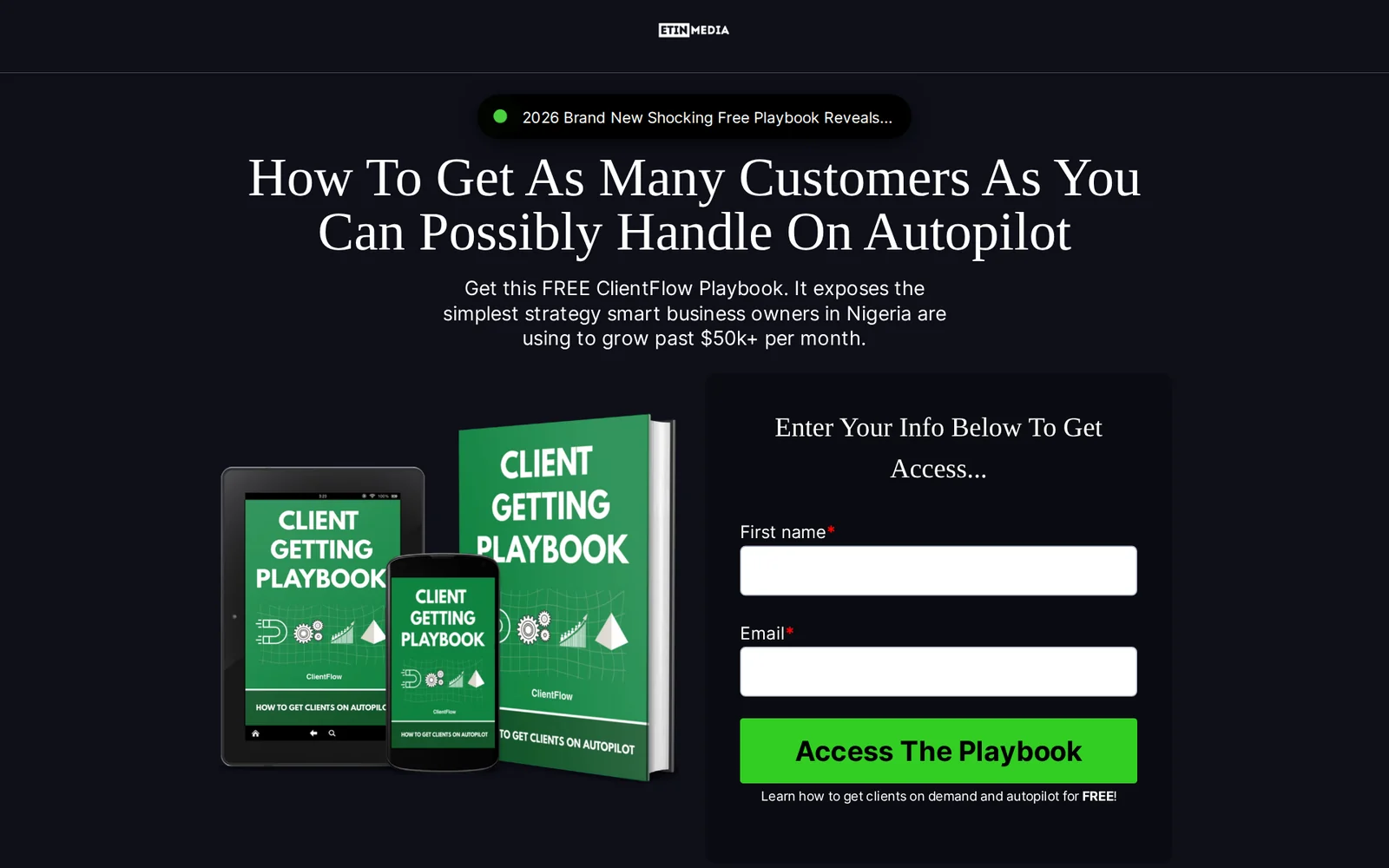
The lead magnet has three jobs: grab attention, build curiosity and build trust. It could be a tool, an ebook or a live training. For our clients, we use a free PDF report because it’s fast to create and converts really well. One of the landing pages I use converts at 50%. About 50 out of every 100 visitors enter their details and move to the next page. That share of visitors who sign up is your opt-in rate.
Start with a problem your ideal client is struggling with. Ideally, it should be urgent.
Suppose I own a recruitment firm and want clients who need software engineers. A lead magnet could cover five traits that look good in other employees but can lead you to hire the wrong engineer.
For example, charisma can make someone impressive in an interview. They communicate well and make you feel they’re highly skilled. But that doesn’t necessarily tell you how good they are at engineering. A more introverted candidate might be a better fit.
That gives an employer a reason to stop and think: am I using the wrong signals to judge these candidates?
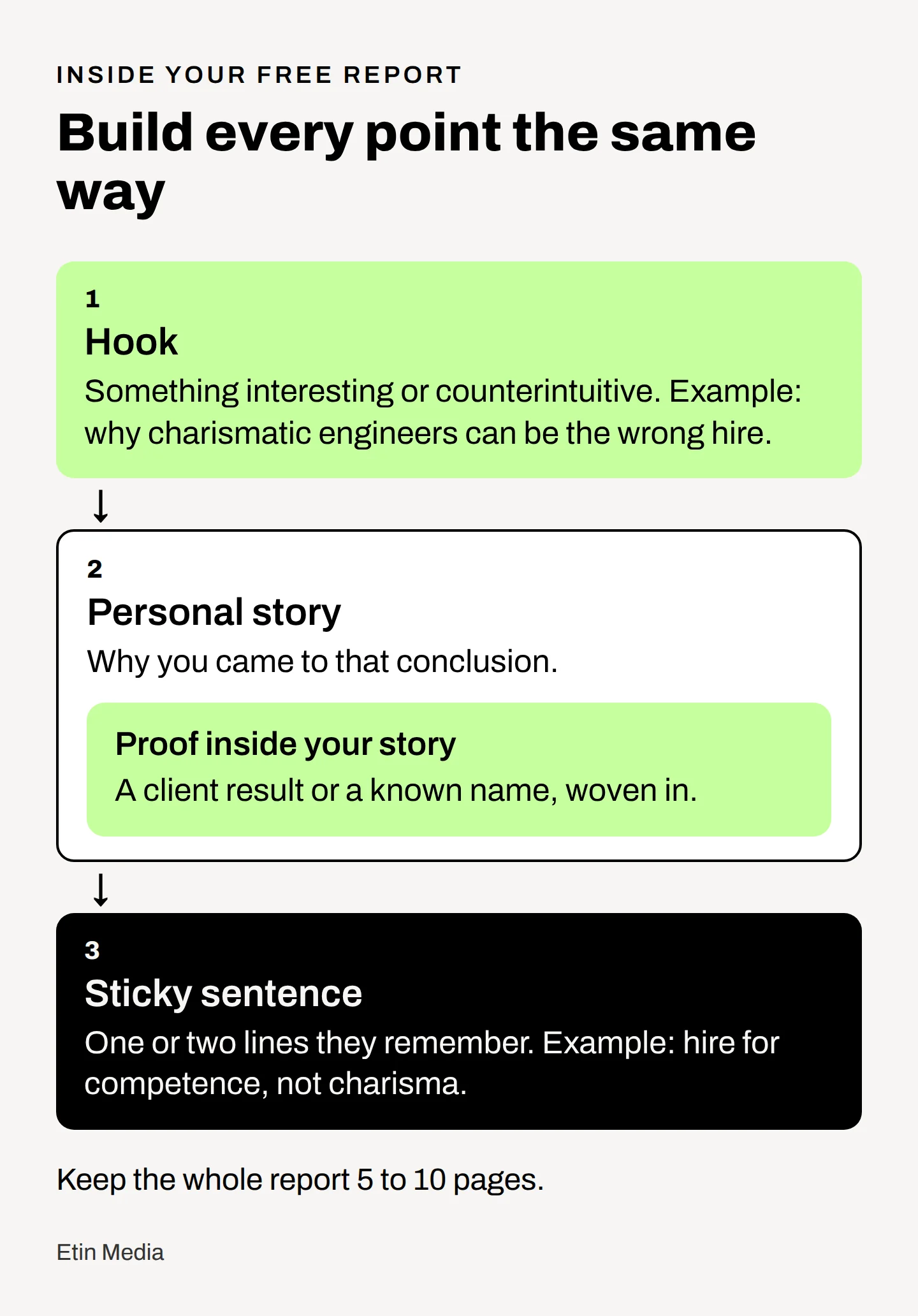
Keep the report short and actionable, five to ten pages maximum. The longer it gets, the fewer people read it. If they don’t read it, it can’t warm them up to become clients.
Structure the report with a hook, a story and a sticky sentence
You can break the report into three or five points. Start each point with an interesting or counterintuitive hook. Then tell a personal story that explains why you came to that conclusion.
Don’t just list statistics. Someone might remember the statistic and forget you completely.
Logically, statistics can be stronger evidence than a personal story, although statistics can be biased too. From a sales perspective, stories work so well because people connect with them. They create a feeling. Before someone cares enough to listen to you, they need to feel good about you.
End the point with one or two simple, memorable sentences. I call this a sticky sentence. In the recruitment example, the idea could be to hire for competence rather than charisma.
Work your social proof, meaning evidence from clients you’ve helped, into the stories. You might tell a story about a conversation with a client you helped get a result, or an interaction with someone your prospects already know. The proof belongs inside the story, so the reader gets to know you and sees why they should trust you as they read.
What to put on your lead magnet landing page
The page needs a headline, a subheadline, an image or video, a form and a button. Under the form, add bullet points that build curiosity about what they’ll learn in the report.
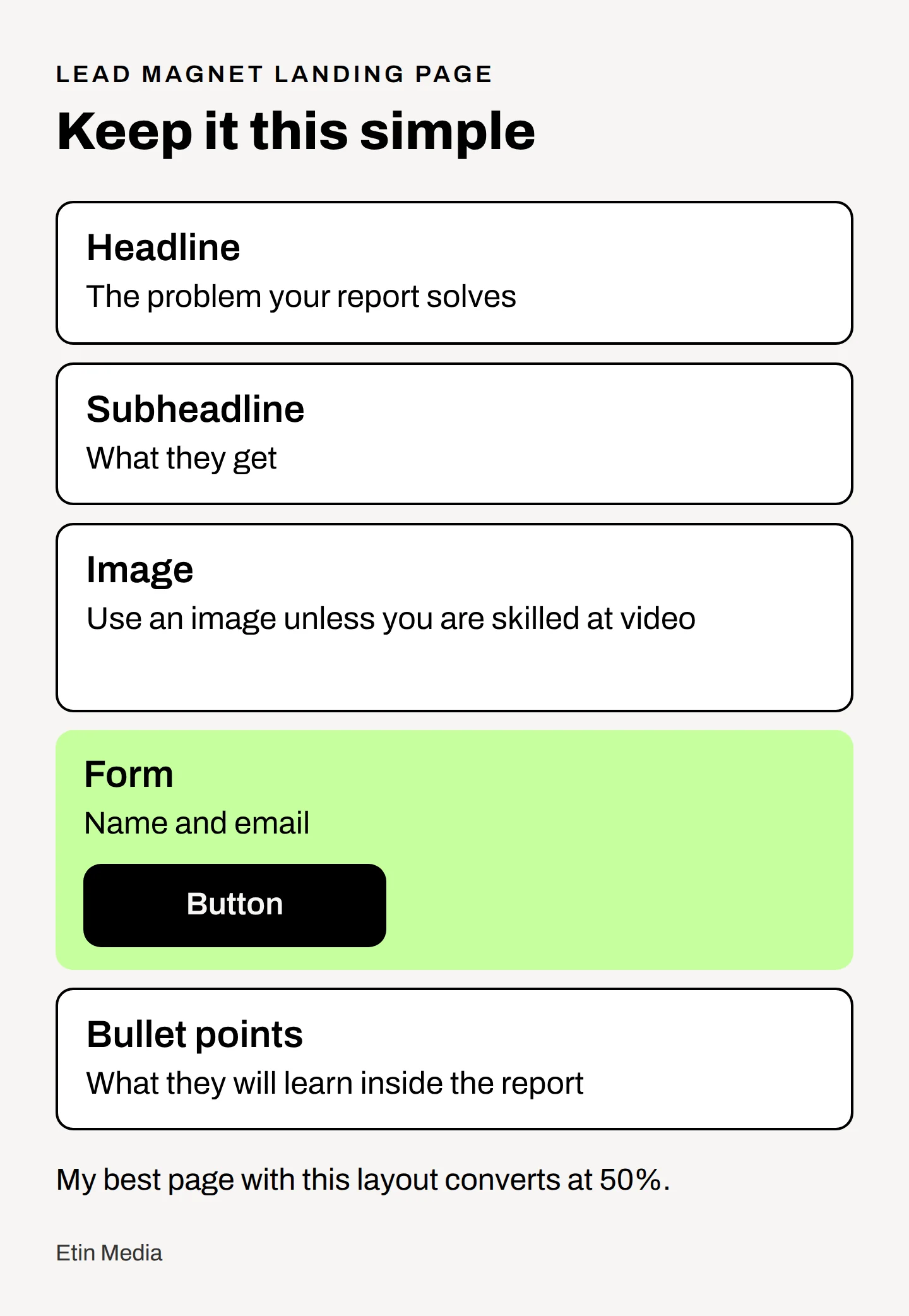
A well-made video can convert better than an image, but making a video that does that takes experience. If you don’t have that experience, use an image. The page I mentioned that converts at 50% uses an image. You don’t need to complicate it.
For the form, I ask for a name and email address. I build mine in GoHighLevel. If your site runs on WordPress, see my WordPress plugins for lead generation article.
Decide whether to collect a phone number
Asking for a phone number can cut your opt-in rate in half because people don’t want to share it. You might make more money in the short term by calling those leads, but fewer people enter your business for you to convert over the next three to six months.
If you’re doing email marketing, or plan to, I recommend leaving the phone number off this form. Anyone who requests the report but doesn’t book goes onto your email list. Not everyone will book a call straight away. With their email address, you can keep warming them up, and they can become clients months later.
If you aren’t going to use email marketing and want the funnel profitable as quickly as possible, add the phone field. Then call every lead who requests the report as quickly as you can, ideally within five minutes, and book the call with them on the phone. They still see the video page, so anyone you don’t reach can book themselves.
You can add a second sign-up button under the bullet points. It doesn’t make much difference to conversion in this setup.
How to write the video in your B2B VSL funnel
For this system, keep the VSL between five and ten minutes. Its job is to build curiosity about your offer, show proof and get someone to book a call.
Open the VSL with a clear promise or claim
Start with a result that makes someone want to keep watching. For example, a hook could be about helping ten clients make $50,000 in the past 30 days. Then explain what the viewer will learn from the next five minutes.
The idea is to make the value of watching clear. If the result matters to them, five minutes of attention is a small commitment.
Explain what to do and what not to do
Talk about what to do and what not to do, with proof and case studies showing how changing an approach produced a result. Sometimes you can take the same material from the lead magnet and turn it into the VSL. That works really well.
A VSL is a video sales letter. People get this wrong because they try to teach everything in it.
Don’t turn those five minutes into a click-by-click walkthrough. You can’t give someone all the context and nuances they need to execute properly in that time.
If they leave thinking they know exactly how to do it, many will try, fail and decide your advice doesn’t work. They’re also less likely to contact you because they think they already have the answer.
Give them enough understanding to see the problem and the solution, and enough curiosity to want to discuss it with you.
Invite viewers to an advisory sales call
At the end, invite them to an advisory call about their business and how the solution would apply to them.
Explain that the call is to understand their situation, recommend a solution and see whether they’re a good fit to work with you. They should know it’s a low-pressure sales conversation, that they can learn from it and that it’s their choice whether to work with you. If they’re not a good fit, you’re not going to sell them.
If you frame it only as a free consultation, people can arrive with a different expectation, and the conversation doesn’t go well.
What to put on your B2B VSL page
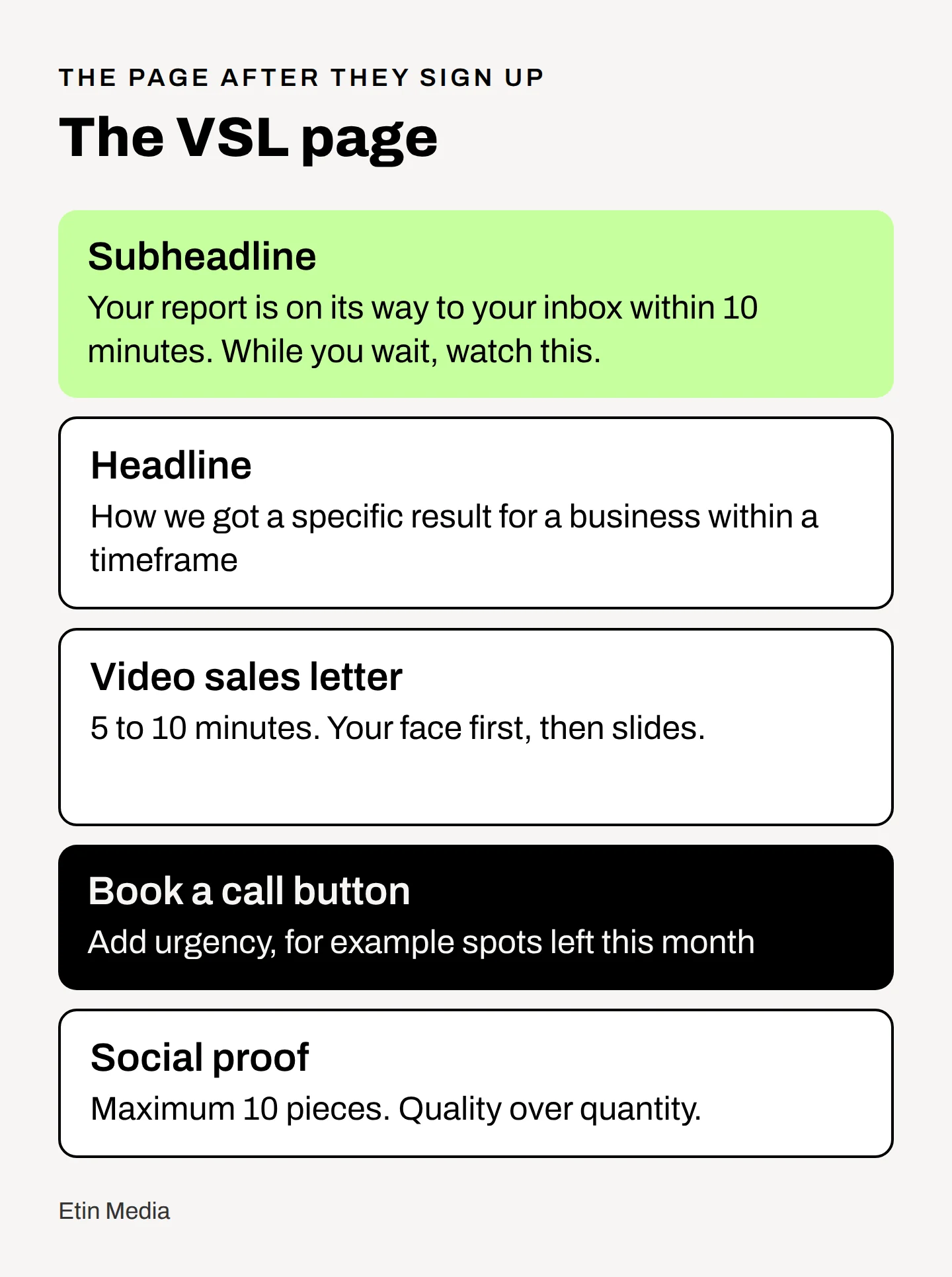
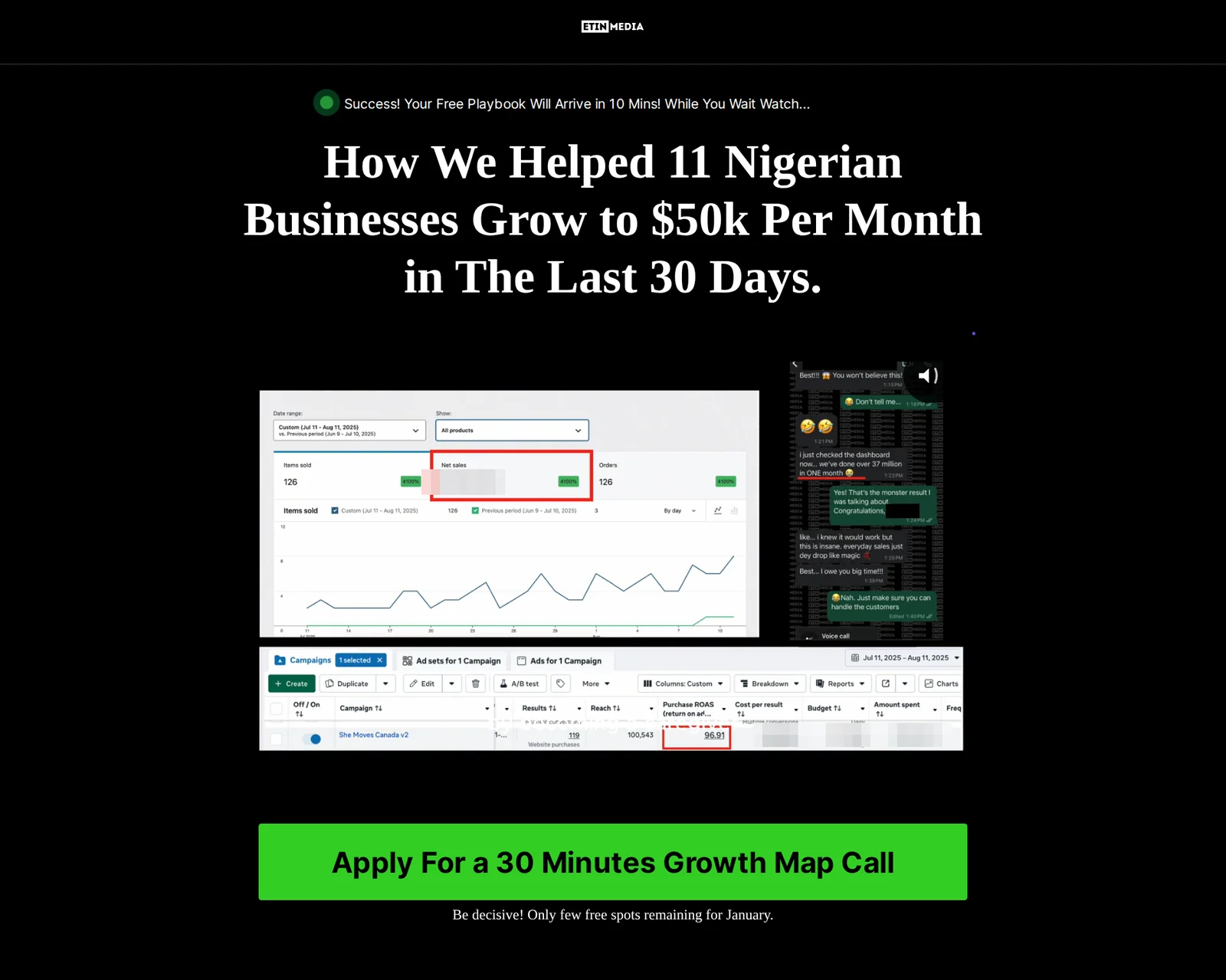
Start the page by telling them their report is on its way to their inbox within ten minutes. Then invite them to watch the video while they wait. The report arrives by email; the video plays right there on the page and its job is to get them to book.
Someone entered their details for a free report. If the next thing they see is a video of you talking, they’re going to wonder where their report went. The subheadline connects those two steps.
After that, use a headline built around the VSL’s result: how you achieved a particular outcome for a particular business within a timeframe. Then put the video beneath it.
Show your face at the start, then move to slides
The format that has worked best for me, including converting people into clients, starts with me on camera and screenshots or a dashboard showing results. Showing your face at the beginning builds trust. It feels like a person is speaking to them, rather than a random voiceover or an AI voice.
Then move to slides so they can focus on what you’re showing without your face distracting them.
Put the booking button below the video and add urgency
Put a call-booking button below the video. Add urgency to the invitation. For example, if I’m taking the calls myself and have room for about ten calls a week, that gives me a reason to ask someone who’s interested to book now. The text under the button can show how many spots are gone and how many remain for the month.
Use a maximum of ten pieces of social proof on the VSL page
On this page, keep it to a maximum of ten pieces of proof. In my experience, conversion barely improves beyond that, while the page becomes longer and people are less likely to read everything.
Choose strong proof. A video case study where the client explains the problem, shows the result and lets you hear how they feel about it is powerful. You can also use dashboards and WhatsApp, SMS or email conversations. Proof doesn’t have to be a revenue number. It has to show how your service changed the client’s business. Think about the quality of each piece, rather than filling the page.
How to set up the sales call booking page
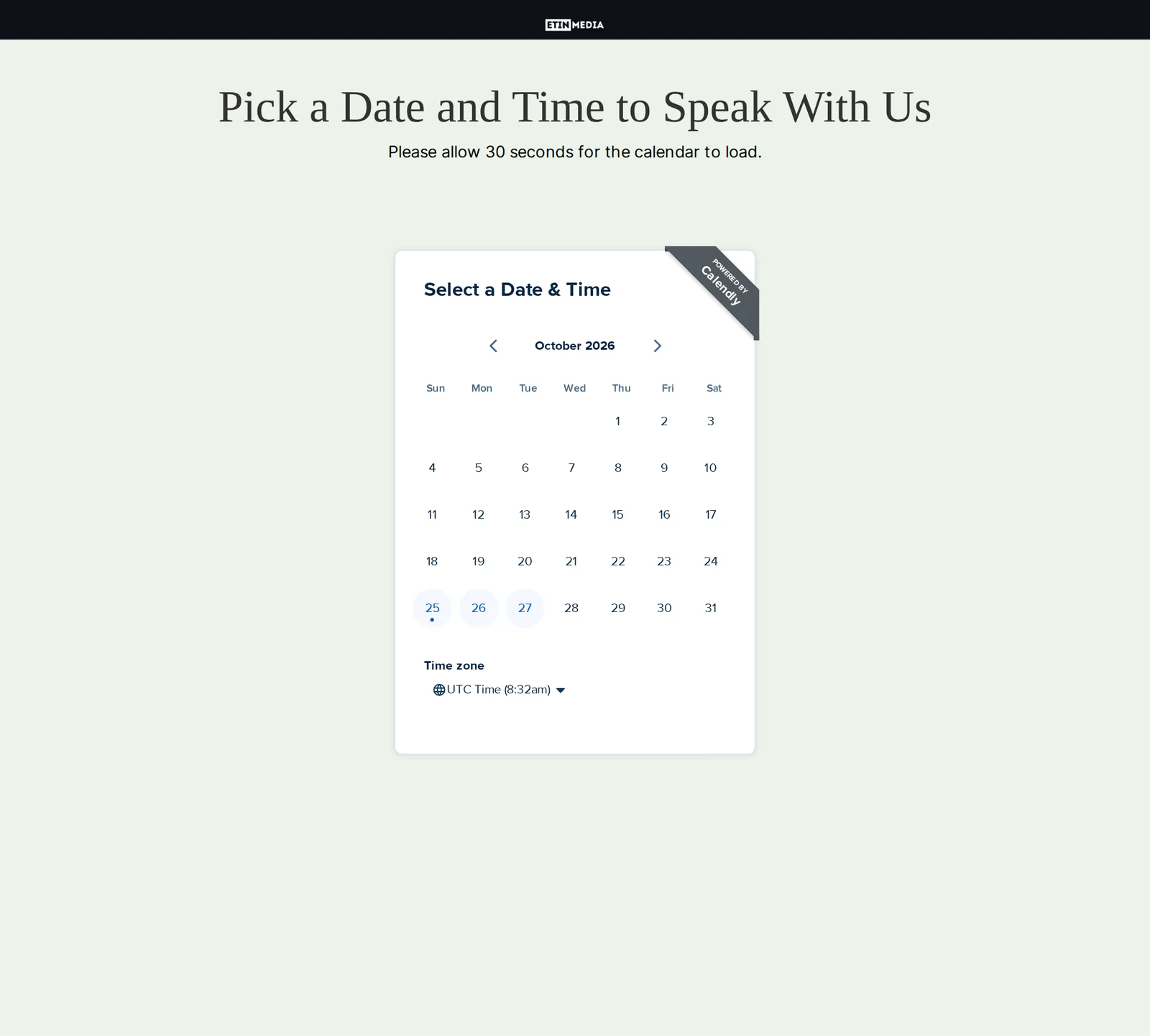
The button takes them to a booking page, such as Calendly or iClose. Keep that page simple, and collect their phone number there so you can make the confirmation call.
Should you qualify your leads, meaning screen out people who aren’t a fit before they get on your calendar? Yes. But when you’re starting, I recommend getting volume first rather than putting qualification in the way of every booking. Once you have more calls and people are wasting your time, add a qualification step before the calendar.
On my booking page, I added a little confetti effect when someone arrives. It makes the step feel like they’ve won something. That increased the booking-page conversion rate.
What to put on your sales call thank-you page
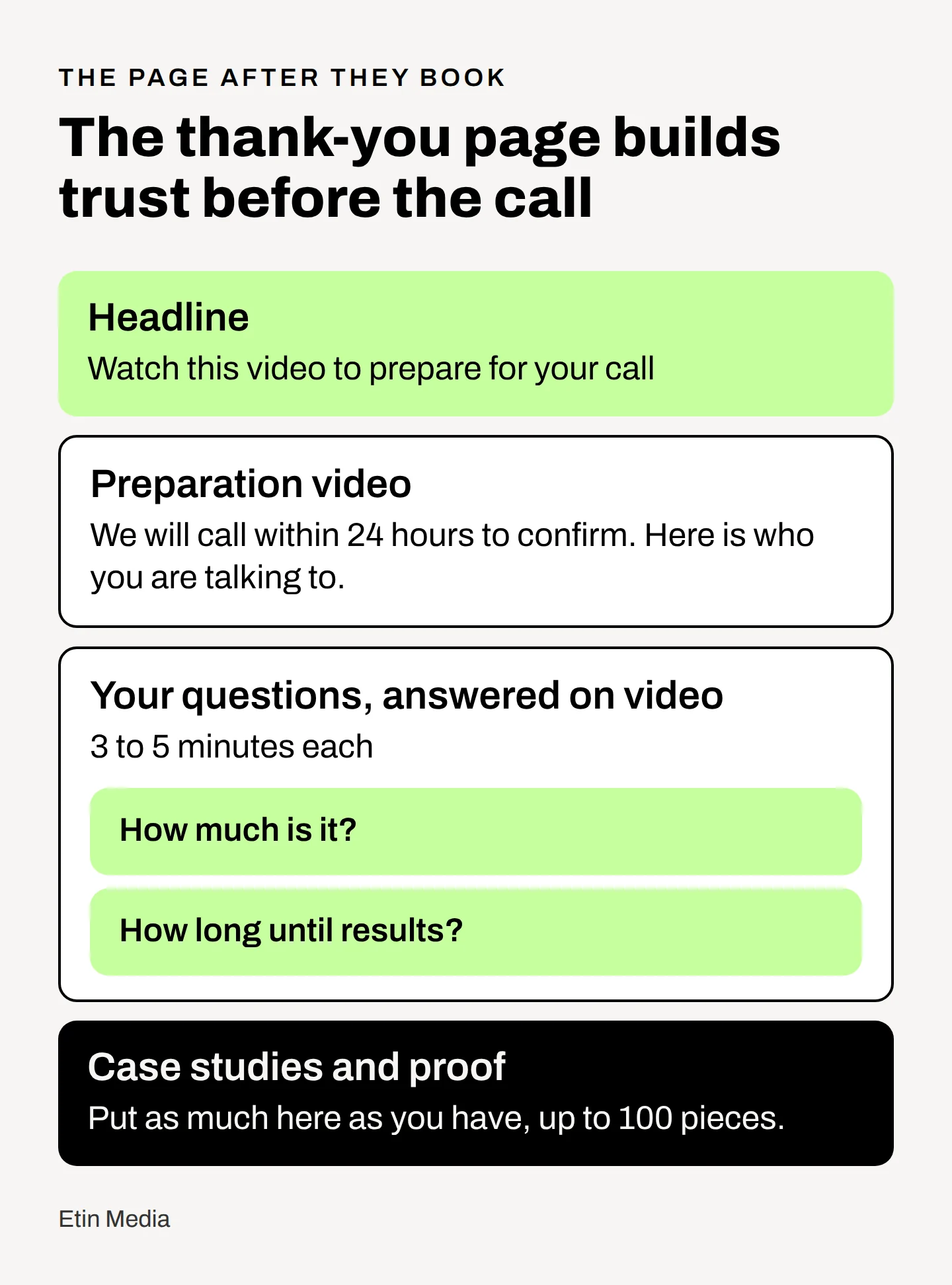
Use the thank-you page to prepare someone for the call with a video, answers to their questions and more case studies. You want them to spend time with you and trust you before the conversation.
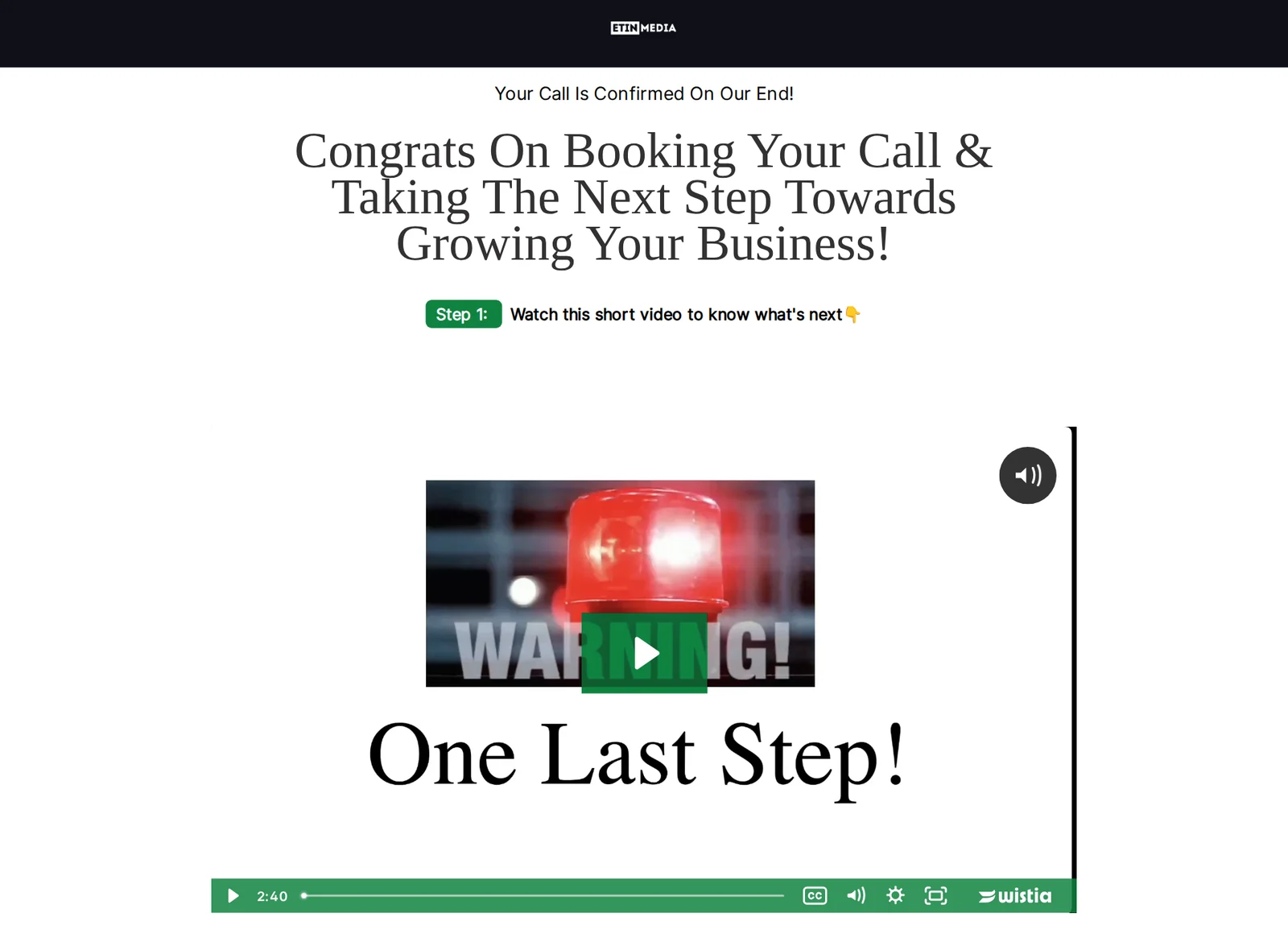
Use the first video to prepare the prospect for the call
The headline can congratulate them and ask them to watch a video to prepare for the call. In the video, thank them and explain that you or your team will call within 24 hours to confirm it.
Then acknowledge what they’re probably thinking. They’ve just found you online. They have questions and want to know who they’re about to speak to.
Help them do that research. Tell them the video will give them more context, so they can decide whether they’re excited about the call or would rather cancel it and save their time.
Talk about your business through the problem they want solved. They don’t care about your company for its own sake. They care about their problem and the solution.
You can explain why you started the business through a problem you faced, or tell a client’s story: what was happening, what you asked them and how you helped. That introduces your business while showing proof that the work gets results.
Answer questions about price and results in short videos
Use three-to-five-minute videos rather than text to answer the questions prospects have before speaking to you. How much does it cost? How long will it take to get results?
Let them see you and hear your voice. By the time they get on a call, the conversation feels easier because they already know you a little.
Think about Alex Hormozi. People have spent so much time watching his content that they recognize his voice immediately. That familiarity builds trust before any sales conversation happens.
If you haven’t built that much content or familiarity yet, the thank-you page gives you a place to spend more time with the prospect before the call.
Add case studies and more proof below the answers. Unlike the VSL page, you can put a lot here, even up to 100 pieces. The goal at this stage is to overwhelm them with evidence from other businesses and business owners like them. If you have three, four or five pieces, use those.
How to increase sales call show up rate
Use a confirmation call, pre-call emails and reminders to get booked prospects to attend. With this whole system, we get show-up rates of 80% to 90% from people who booked through ads.
Confirm the booking by phone within 24 hours
Have someone call within 24 hours of the booking, and always before the appointment, to confirm that the prospect will attend and prepare them for the conversation. You can do it yourself if you have the time. This increases the show-up rate.
Once they’ve confirmed the time, you can ask, “I actually have a couple of minutes right now. Would you like to do the call now?”
If they say yes and you’re available, have the conversation there and then. I’ve noticed higher conversion when we speak immediately. They’ve just seen the ad and VSL, and their desire to solve the problem is high. If you take the call early, cancel the original appointment so the reminders stop.
Send two or three automated emails before the appointment
Send two or three automated emails between the booking and the appointment. These go only to people who booked, and they go out automatically, whether or not you’ve reached them by phone yet. If the call is very soon, send what fits before it. They should do the same work as the thank-you page: show case studies, answer questions, demonstrate that you’re good at what you do and build curiosity about the solution.
Here’s a bonus. Host the thank-you and FAQ videos on YouTube as unlisted videos, which means only people with the link can find them. Then embed them, which means placing the YouTube player on your page. Don’t use a paid video host like Wistia or upload the files straight to your website.
You need a YouTube account to host these videos. Posting regular content on it is optional, but I recommend it. I use this to help prospects find more of my YouTube content. After watching the embedded videos, they’re more likely to encounter my videos when they open YouTube, visit the channel and spend more time with me. Make YouTube videos, even if the production quality isn’t perfect. That content helps warm up the leads before the call.
Send SMS or WhatsApp reminders before the sales call
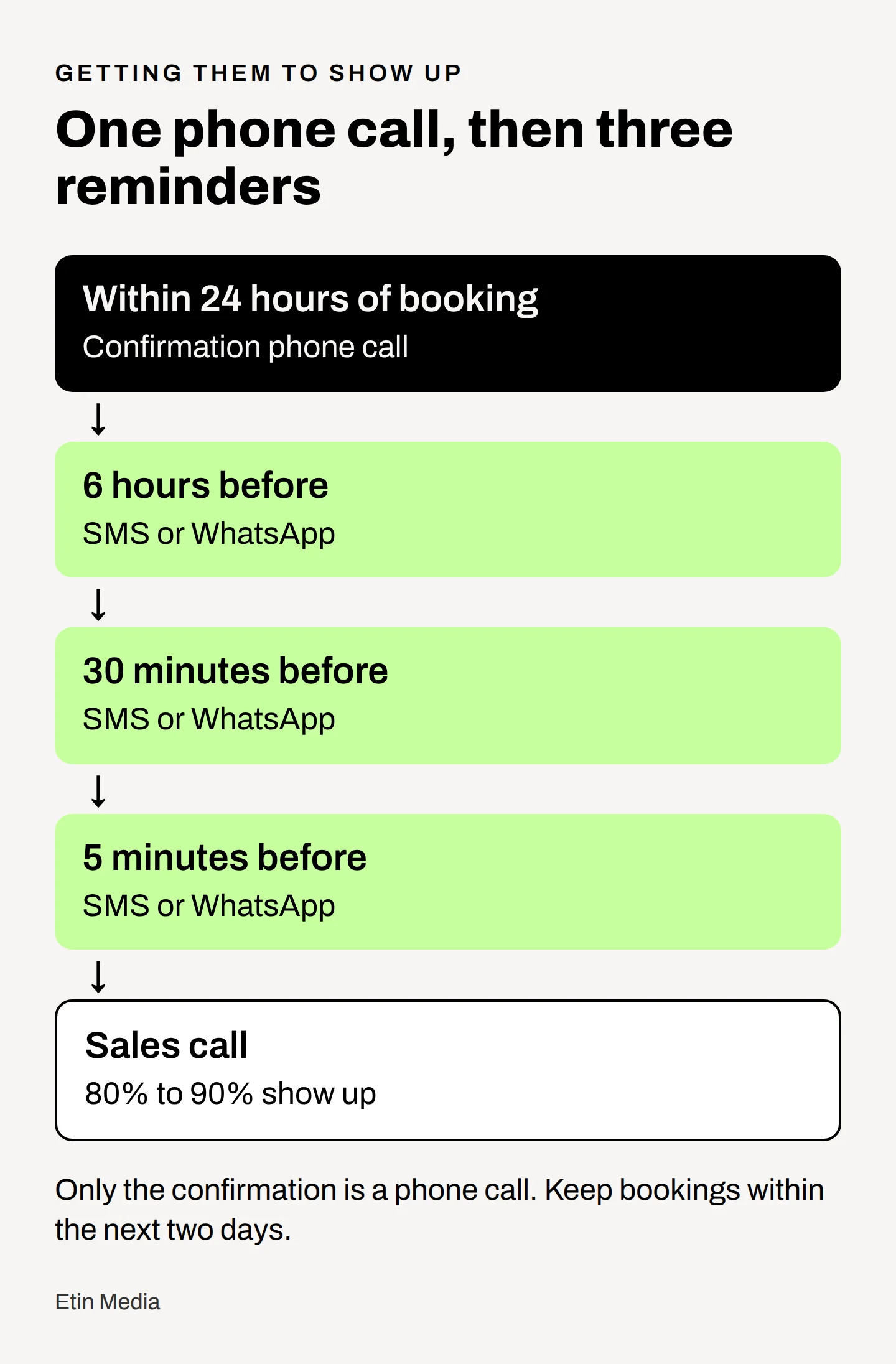
After the confirmation phone call, send SMS or WhatsApp reminders at these times. I automate them in GoHighLevel:
- Six hours before the appointment.
- Thirty minutes before.
- Five minutes before.
The first contact is the confirmation phone call within 24 hours of booking. The later reminders are messages. If someone books for later today, send only the reminders that are still ahead.
Limit call availability to the next two days
Limit the calendar to a maximum of two days ahead. If someone books three or four days out, they can forget about it. Tomorrow, or later today, keeps the call close to the moment they became interested.
What to say in your B2B Facebook ads: my six-step framework
Your ad gets someone interested in the lead magnet. From my experience and testing, this is the six-step structure that works best for B2B ads.
Once you understand the funnel, writing the ad becomes much easier. You know what the rest of the system will do after someone clicks.
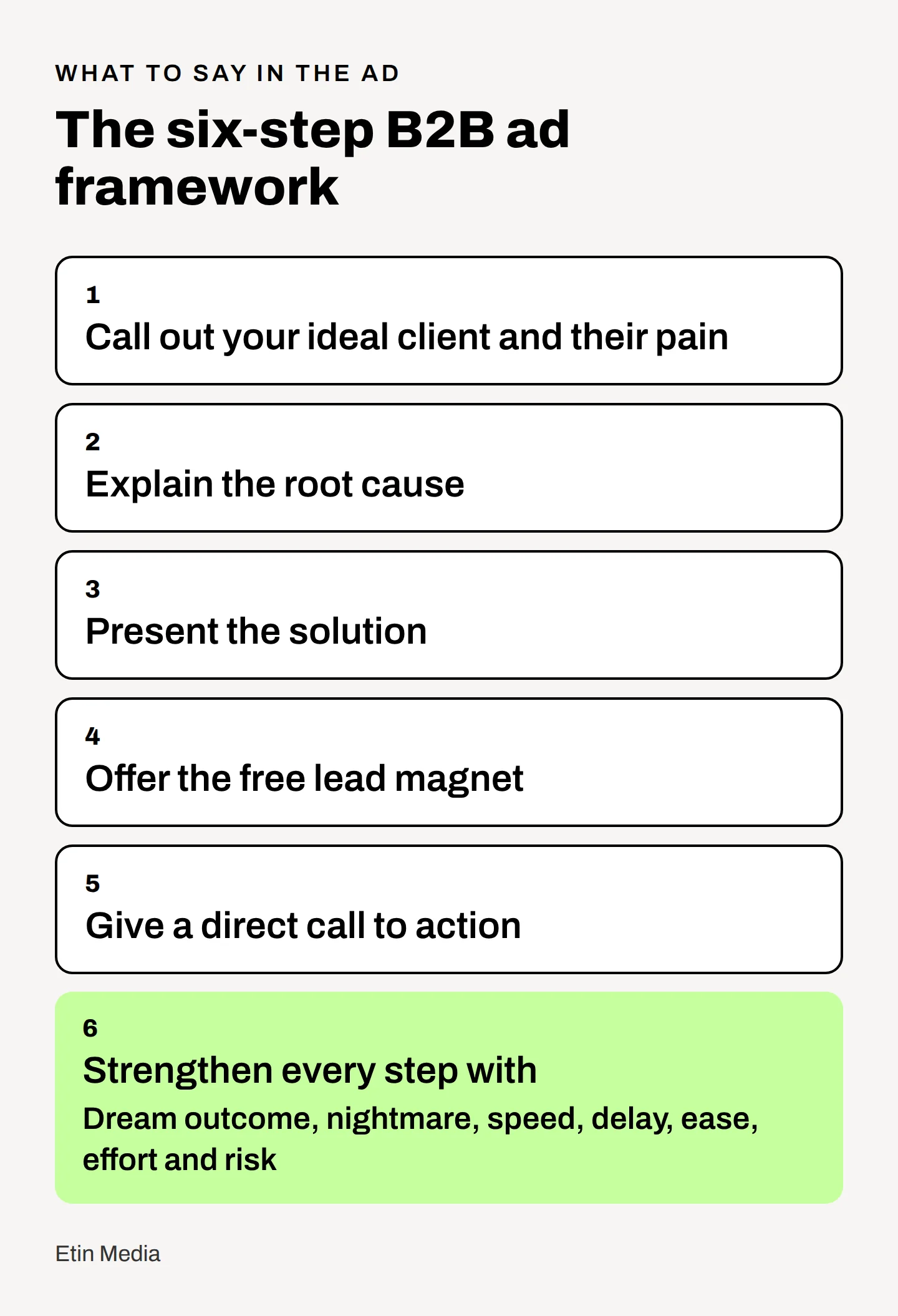
1. Call out your ideal client and their pain
Make it clear who the ad is for and what problem you’re addressing. This is your ideal client, your ICP. A simple starting point is, “If you’re struggling with X, here’s how I’d fix it.”
2. Explain the root cause
Explain why the problem is happening. When you describe someone’s problem well, they believe you understand it.
This is where you help them see why they’ve been struggling, rather than simply repeating that they want more clients or more revenue.
3. Present the solution
Connect the solution to the root cause you’ve just explained. Show them what needs to change to solve that problem.
4. Offer the lead magnet
At this stage, you’re selling the free report, not your B2B service. Introduce it as the thing that explains how to solve the problem you’ve just described.
5. Give a direct call to action
Don’t make this fancy. Tell them to click the Learn More button or the link, enter their name and email so you know where to send the report, and request it. Then explain that it will arrive in their inbox.
6. Strengthen the persuasion throughout
Go back through the ad and make each of these stronger:
- Dream outcome: what they get if they act.
- Nightmare: what happens if they don’t.
- Speed and delay: how quickly they get the result.
- Ease and effort: how little work it takes.
- Risk: what they have to lose, which for a free report is nothing.
Using the recruitment example, the dream outcome is hiring good engineers who help the business grow faster. The nightmare is hiring the wrong person and wasting years, money and training.
For speed, the report is only five to ten pages. They can read it in one sitting and use the ideas to avoid losing one or two years to poor hiring decisions. For ease and effort, show how simple the report is to read and the ideas are to use. For risk, the report is free. They enter their name and email to get it.
Record yourself delivering the ad as a video. When you make a claim, show an image that backs it up in the video, such as a screenshot of the result, so people have a reason to believe you.
How many B2B Facebook ads to start with
Start with four or five distinct ads. Each one is a different message built with the six steps above. You don’t need a huge volume of ads when you’re getting started with B2B. Focus on making these good.
For each ad, record three versions of the video with a different hook, the opening line that grabs attention. Five ads with three hooks each gives you 15 videos.
Then launch them in Ads Manager, Meta’s tool for running ads. Always choose Sales as the campaign objective. It gets you the highest-intent leads, meaning the people most likely to buy. You need a Facebook business page and an ad account first. Inside Ads Manager, a campaign holds an ad set, and the ad set holds your ads. Upload all three hook videos, two versions of the copy (the text above the video) and two headlines (the short bold line under it) into the same ad. Meta tests the combinations for you.
Set the daily budget at two to three times your expected cost per action (CPA). Here the action is a booked call, so CPA is what you expect to pay for each booked call. If you don’t know that number yet, spend $20 per ad per day. The budget is per ad, not per video, so three ads means at least $60 a day and five ads means $100 a day. Run them for two to four days before you judge the results.
Keep the headlines simple. You can use the title of the lead magnet or the hook from the video. For more on writing the headline, see my six-step guide to writing a killer headline.
Facebook ads funnel FAQs
Should I ask for a phone number on the lead magnet form?
If you’re using email marketing, or plan to, I recommend asking for a name and email without the phone number. You can keep warming up leads who don’t book a call straight away. If you won’t use email marketing and want the funnel profitable quickly, collect the number and call as soon as possible, ideally within five minutes.
Should I qualify leads before they book a sales call?
When you’re starting out, I recommend getting volume first. Once you’re getting more calls and people are wasting your time, add a qualification step before they book.
How long should a B2B VSL be?
A VSL can be as short as three minutes or as long as an hour. For this funnel, I recommend five to ten minutes. Build curiosity about your offer, show proof and invite the viewer to book a call.
What to check if your B2B Facebook ads aren’t getting leads
If this basic setup isn’t producing leads and clients, look at your funnel and what you’re saying in the ads before blaming how you clicked the buttons.
You don’t need to get lost in targeting tricks, meaning detailed settings for who sees your ad, to start getting leads and clients. Meta has done much of that work. There are things you can optimize later.
Most of the work is in how you build each step of the system. Give the prospect a reason to pay attention, make them curious enough to book and use the time before the call to help them trust you. That’s what gets you to a better sales conversation.
Get help building your B2B funnel
If you want this funnel built for your business, book a free advisory call with me. We’ll talk about your business and how to fit this system to it.